
Lens Replacement Surgery in Huddersfield
Piggyback Lens Surgery
Secondary lens implant surgery places an additional intraocular lens alongside your existing implant , correcting residual prescription errors or adding multifocal capability without touching the original lens. A safe, reversible procedure to restore the clarity you expected after cataract surgery.
As Seen In











Read About Our Happy Patients
After lens implant treatment, Lisa shared that she felt reassured throughout the process and described the result as life changing, with a major improvement in day-to-day vision and independence.
Lisa ParryGail said her lens replacement surgery made everyday life much easier, especially for activities such as going to the gym and swimming, and highlighted how pleased she was with the outcome.
Gail TaylorWhat Is Secondary Lens Implant Surgery?
A secondary lens implant , also known as a piggyback lens or supplementary IOL , is an additional intraocular lens placed inside the eye alongside the lens already inserted during your cataract surgery. It does not replace the original implant. Instead, it acts as a precision refinement , like a permanently placed internal contact lens that fine-tunes how light focuses in your eye.
Around 5% of cataract patients are left with a residual prescription after their original surgery. This can mean blurred vision, continued reliance on glasses, or uncorrected astigmatism. Rather than removing the primary lens (a more complex procedure), a thin supplementary secondary IOL is inserted through a small incision and precisely positioned alongside the existing implant. The original lens stays completely untouched.
Piggyback lens surgery takes just 15–30 minutes, is fully reversible, and carries a lower risk profile than a full IOL exchange. It is available with monofocal, toric, trifocal, and EDOF lens options , the same advanced technology used in premium cataract surgery, applied as a targeted correction.
At a Glance
- Purpose: Correct residual error after cataract surgery
- Technique: Supplementary lens alongside existing IOL
- Original lens: Stays in place , untouched
- Anaesthesia: Drops only (no needles)
- Duration: 15–30 minutes per eye
- Recovery: Vision improves within hours–days
- Reversible: Yes , can be removed or adjusted
- Lens options: Monofocal, toric, trifocal, EDOF
Supplementary Lens Options
Monofocal Secondary Lens
A high-quality monofocal supplementary IOL corrects residual distance or near prescription after your original cataract surgery. It is a reliable, proven option that restores clear vision at one focal distance. Reading glasses may still be needed for other distances.
Trifocal / EDOF / Toric Secondary Lens
Advanced supplementary lenses , including trifocal, EDOF (extended depth of focus), and toric designs , can correct astigmatism and provide vision across near, intermediate, and distance ranges. Designed for patients seeking greater freedom from glasses after cataract surgery.
Secondary Lens Implant at a Glance
Procedure Time
15–30 min per eye
Anaesthetic
Local drops only
Patient comfort is our priority.
Downtime
7–14 days
Back to Work
1–3 days (desk)
2–4 weeks for physical roles.
Results Duration
Permanent
The supplementary lens lasts a lifetime.
Cost From
£4,000 per eye
0% finance available.
You May Benefit from a Secondary Lens Implant If…
Your consultant will assess your eyes and confirm whether a secondary IOL or an alternative approach is most appropriate for you.
Common Indications
Residual Refractive Error
Your vision after cataract surgery is not as sharp as expected , a 'refractive surprise' leaving you more short-sighted or long-sighted than planned. This affects approximately 5% of cataract patients.
Unexpected Astigmatism
Residual astigmatism that was not fully corrected during the original surgery, causing blurred or distorted vision that glasses alone cannot satisfactorily resolve.
Desire for Glasses Independence
You had a monofocal lens during cataract surgery and now wish to add multifocal or EDOF capability to reduce dependence on reading glasses , without removing the original implant.
Post-Refractive Surgery Patients
Patients who previously had corneal laser surgery (LASIK, PRK) are more prone to IOL power miscalculations. A piggyback lens offers a precise correction without corneal intervention.
IOL Exchange Not Suitable
When the original lens has been in place too long for safe removal, or when a full IOL exchange carries higher risk, a piggyback lens achieves the correction safely without disturbing the primary implant.
How Does Piggyback Lens Surgery Work?
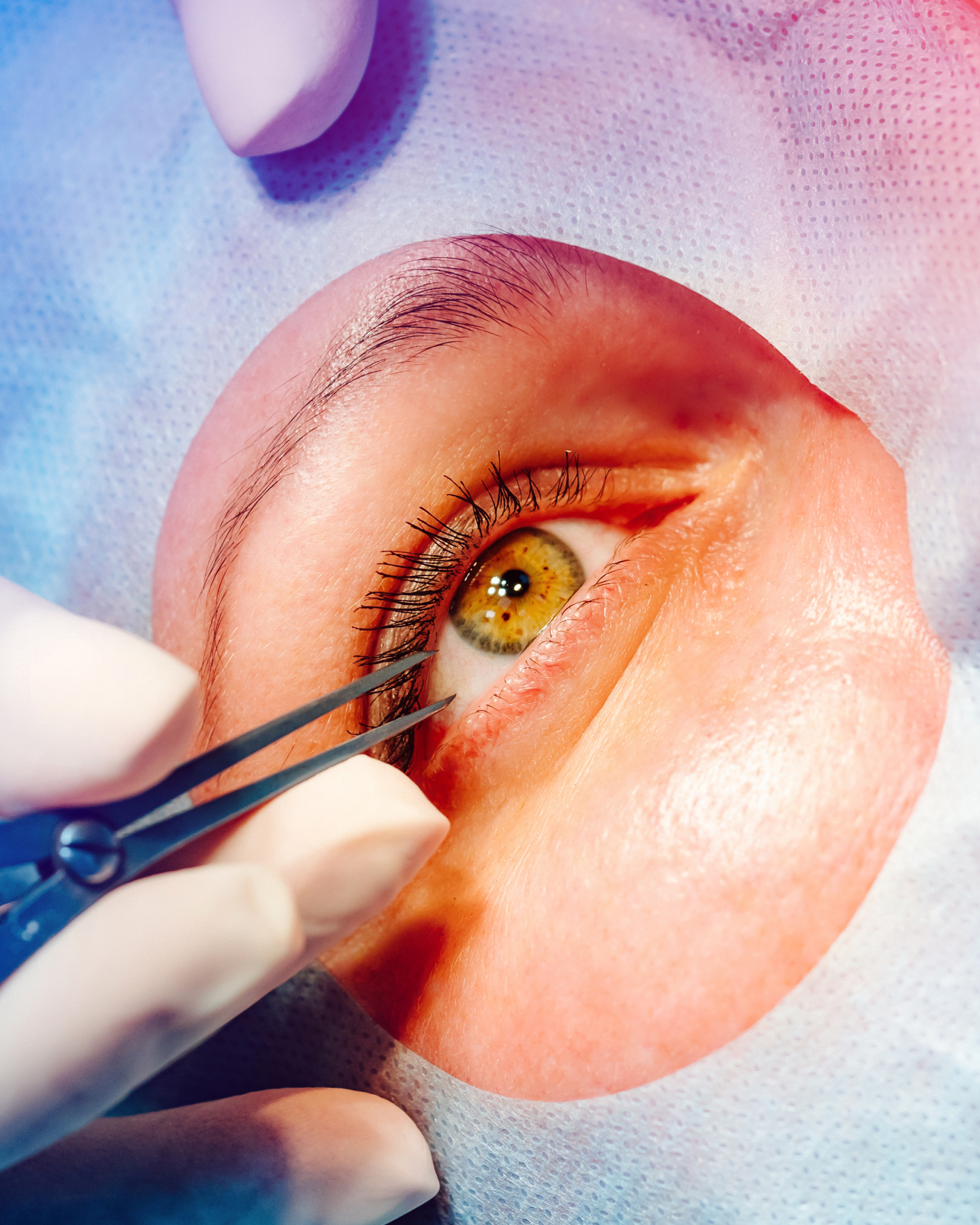
The procedure is straightforward and typically takes 15–30 minutes per eye under local anaesthetic drops. Your original lens is never disturbed , a thin supplementary IOL is simply placed alongside it through a small micro-incision, then precisely positioned to achieve your target prescription.
Comprehensive Assessment
Your consultant performs detailed measurements including refraction, biometry, corneal topography, and anterior chamber depth to determine the precise power and type of supplementary lens needed.
Lens Selection
A custom supplementary IOL is selected based on your specific residual prescription. Options include monofocal, toric (for astigmatism), trifocal (for multiple distances), and EDOF lenses , tailored to your vision goals.
Local Anaesthesia
Anaesthetic drops numb your eye completely. No injections or general anaesthetic required. You will be comfortable and awake throughout the brief procedure.
Supplementary Lens Insertion
Through a small micro-incision, the thin supplementary lens is carefully inserted and positioned in front of or behind your existing IOL , typically in the ciliary sulcus. The original lens remains untouched.
Recovery & Follow-Up
You go home the same day. Vision improvement is typically noticed within hours to days. Antibiotic and anti-inflammatory drops are used for a few weeks. Follow-up appointments monitor your visual outcome.
Key Advantages
Primary Lens Untouched
The original IOL remains securely in its capsular bag. This avoids the risks of full lens exchange , including vitreous loss, capsular rupture, and corneal endothelial damage.
Safer Than IOL Exchange
Piggyback insertion is a simpler, shorter, and lower-risk procedure compared to removing and replacing the original lens , particularly when the primary IOL has been in place for months or years.
Fully Reversible
Unlike laser enhancement or IOL exchange, a piggyback lens can be removed or replaced if your prescription changes or if the correction needs adjusting in future.
Highly Predictable
Studies show 85% of piggyback lens patients achieve within ±1 dioptre of their target prescription , superior to IOL exchange (62.5%) and comparable to laser enhancement.
Multiple Lens Options
Choose from monofocal, toric, trifocal, toric trifocal, or EDOF supplementary lenses , the same advanced technology available for primary cataract surgery, now applied as a precision refinement.
Rapid Recovery
Most patients notice improved vision within hours to days. The small incision heals quickly, and normal activities can typically be resumed within days.
Benefits of Secondary Lens Implant Surgery
Who Will Perform Your Surgery?
Dr Fayyaz Musa
MBChB (Edin) FRCOphth (Lon) CertLRS (RCOphth) PGDipCRS
Consultant Corneal & Glaucoma Surgeon · Expert in Lens Implant Surgery
Dr Fayyaz Musa is a UK-trained consultant eye surgeon with fellowship-trained expertise in corneal, lens, and glaucoma surgery. He has extensive experience in premium IOL procedures and secondary lens implant surgery, helping patients achieve the visual outcomes they expected after cataract surgery.
Driven by open and honest communication, Dr Musa explains every option so you can make a fully informed choice. His precise, patient-focused approach ensures you are supported from your first consultation through to full recovery.
- Fellowship-trained in anterior segment and lens surgery
- Open and honest advice , no pressure, no jargon
- Customised care tailored to your eyes and lifestyle

The Consultation Process
Free Phone Assessment
A relaxed 15-minute call to understand your concerns, explain your options clearly, and determine whether secondary lens implant surgery is suitable for you.
Clinical Consultation
You meet your consultant for a detailed eye examination. Advanced diagnostics map your eye and confirm the optimal supplementary lens based on your prescription and lifestyle.
Your Treatment Day
The procedure takes approximately 15–30 minutes per eye. Local anaesthetic drops ensure a comfortable, pain-free experience. You go home the same day.
Aftercare
A clear aftercare plan with eye drops, scheduled follow-up appointments, and ongoing support to ensure smooth healing and the best possible visual outcome.
Secondary Lens Implant Cost
Secondary Lens Implant
From £4,000
per eye · includes all follow-up care
Frequently Asked Questions
Am I a suitable candidate for secondary lens implant surgery?
Suitability is confirmed through a detailed eye examination. You may be a candidate if you have residual blurred vision, astigmatism, or ongoing reliance on glasses following your original cataract surgery. Your consultant will assess your eye measurements, anterior chamber depth, and existing IOL to confirm whether a supplementary secondary IOL is the right option.
Is secondary lens implant surgery safe?
Yes. Piggyback lens surgery is a well-established, low-risk procedure. Because the original IOL is not removed, it avoids the higher-risk steps associated with full IOL exchange. It is performed by a fellowship-trained specialist under local anaesthetic drops.
What is a piggyback lens?
A piggyback lens (also called a secondary or supplementary IOL) is an additional intraocular lens placed inside the eye alongside the original lens implanted during cataract surgery. It fine-tunes your vision without removing the primary lens , similar to wearing a contact lens permanently inside the eye.
Are there alternatives to a secondary lens implant?
Yes. Alternatives include glasses or contact lenses (temporary), laser enhancement such as LASIK or PRK (non-reversible corneal reshaping), or full IOL exchange (higher-risk removal and replacement of the original lens). Your consultant will recommend the most appropriate option based on your corneal health, residual prescription, and preferences.
What results can I expect?
Most patients achieve significantly sharper vision with reduced or eliminated dependence on glasses. Studies show 85% of piggyback lens patients achieve within ±1 dioptre of their target prescription. Premium lens options (trifocal, EDOF) can provide vision across near, intermediate, and distance ranges.
Meet the Team

Dr Fayyaz Musa
Founder | Consultant Corneal & Glaucoma Surgeon
LEARN MORE »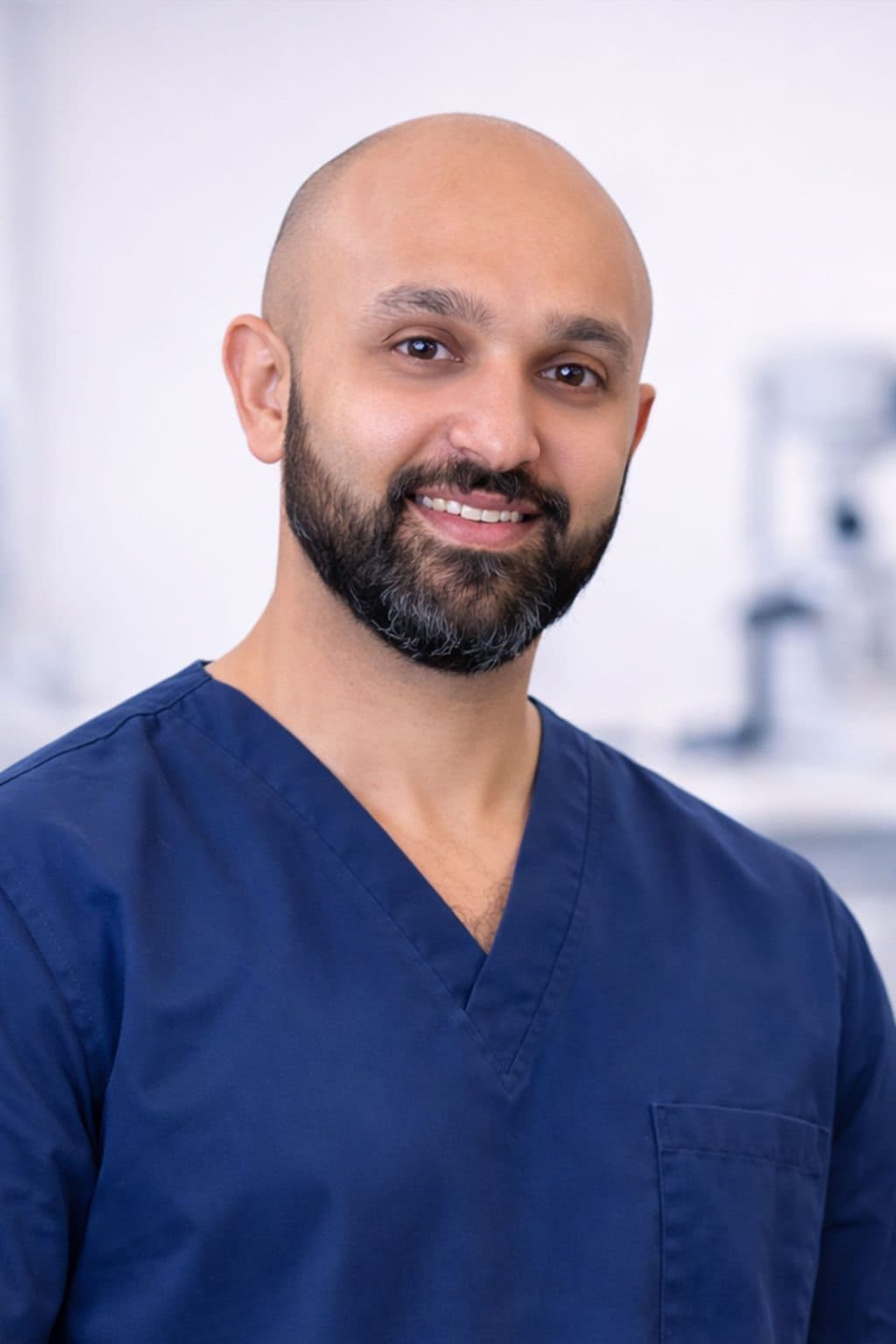
Mr Murtuza Mookhtiar
Consultant Ophthalmologist & Vitreoretinal Surgeon
LEARN MORE »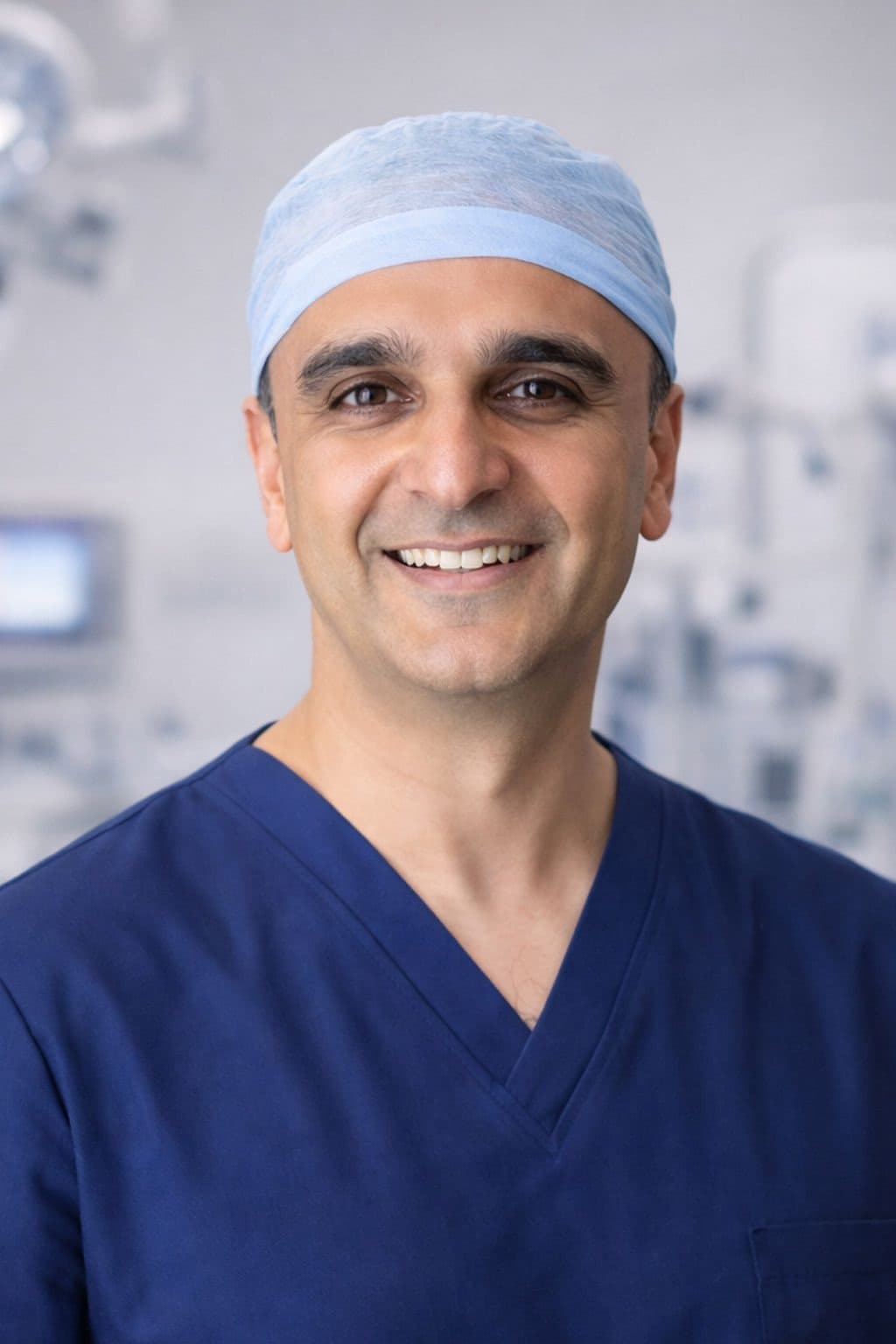
Professor Irfan Jeeva
Professor of Ophthalmology & Consultant Oculoplastic Surgeon
LEARN MORE »
Mrs Indira Madgula
Consultant Ophthalmic Surgeon & Glaucoma Specialist
LEARN MORE »Dr Fayyaz Musa
Founder | Consultant Corneal & Glaucoma Surgeon
LEARN MORE »Mr Murtuza Mookhtiar
Consultant Ophthalmologist & Vitreoretinal Surgeon
LEARN MORE »Professor Irfan Jeeva
Professor of Ophthalmology & Consultant Oculoplastic Surgeon
LEARN MORE »Mrs Indira Madgula
Consultant Ophthalmic Surgeon & Glaucoma Specialist
LEARN MORE »Dr Fayyaz Musa
Founder | Consultant Corneal & Glaucoma Surgeon
LEARN MORE »Mr Murtuza Mookhtiar
Consultant Ophthalmologist & Vitreoretinal Surgeon
LEARN MORE »Professor Irfan Jeeva
Professor of Ophthalmology & Consultant Oculoplastic Surgeon
LEARN MORE »Mrs Indira Madgula
Consultant Ophthalmic Surgeon & Glaucoma Specialist
LEARN MORE »Gain Freedom from Glasses with Secondary Lens Implant Surgery in Huddersfield
Take control of your vision with a precise supplementary lens tailored to your eyes. Consult Dr Fayyaz Musa for a personalised assessment. Call +44 7447 177986 or book online.